A dripping wet camp shelter at the end of a rainy camp trip is a huge pain. When left packed wet for too long, mildew, musty smells, and stubborn creases will develop. Furthermore, drying your shelter carelessly can also stress out the fabric's surface coating, seams, and even fine mesh panels. Consider these issues before storing your camp shelter for your next wet camp trip, and choose a drying strategy that suits your situation.
Start by separating the wet parts
Empty your tent. All of it. Then, shake out as much dirt and debris as possible and separate out the components to the fly, poles and so on for the ground cloth, etc. Mud can dry to become very abrasive so make sure to clean any mud off of the tent fabric before storing it away for the season. Also, it is best to store damp items separately from other damp items as they will only slow down the other items from drying.
Do not mix the inner tent and the rainfly. The fly has usually taken the greatest amount of water to penetrate, while the tent body may have gotten a little wet from condensation or from having come into contact with damp ground. In storing the clothing, for example, you would keep your wettest clothes apart from your less wet clothes. The same goes here.
Don't forget to check for dirt on poles before storing them. Wipe them down with a cloth if necessary and make sure any connectors, tips and elastic cord are allowed to dry out as well. Make sure metal stakes are not left wet in a closed pouch or bag – surface grime + moisture = worst!
Choose the drying method that fits your space
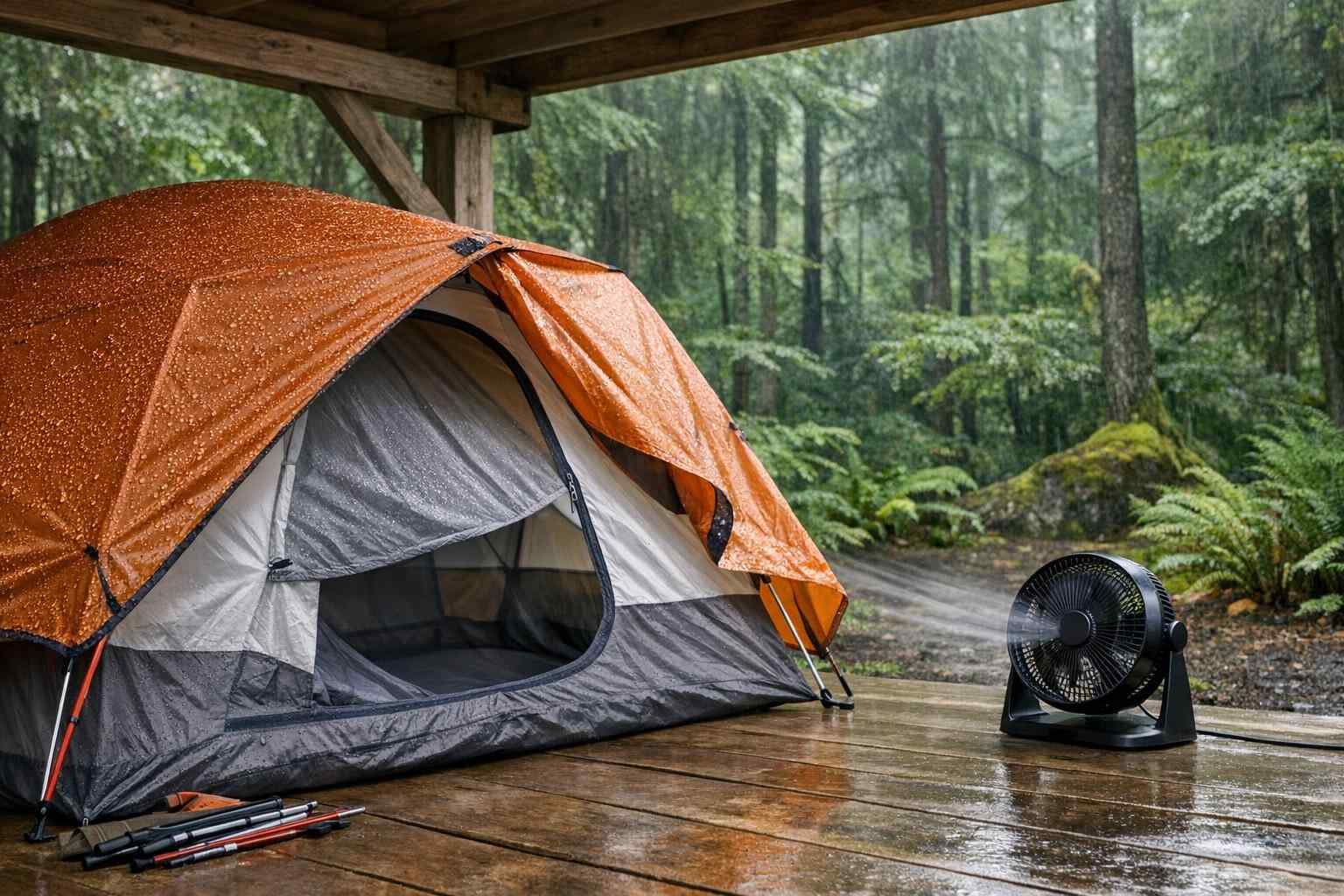
Pitching the shelter again in a dry location is the most reliable method to dry a tent quickly. The flies should be draped or attached as if the shelter were pitched. Doors and vents should be opened to allow maximum airflow through the shelter. It is better to dry a tent in the shade rather than in direct sunlight for extended periods of time. The sun's ultraviolet rays can destroy most tent fabrics over time.
Set up the shelter in a garage, covered porch, or even a large indoor room (keeping it away from dirt, pets, etc.) to allow for ventilation and to dry the outer fly. Avoid folding wet sections of the tent up on themselves and instead try to open up the fabric as much as possible to allow air to pass through. A small fan can be effective in speeding up the drying time by circulating air through the shelter.
Even less-than-mildly-damp tent(s) should not be left to dry in bathrooms (or similar micro-environments), as this environment has very limited air change, thus contributing to an extension of the drying time required. Heat in a room is of no use unless adequate ventilation is also provided.
When a second pitch is not practical
If you are going to pack up your tent whilst wet it's best to pack it loosely so as not to crease any of the fabric, and to keep the fly and tent body in separate bags. This will help to prevent any further moisture becoming trapped and will make unpacking easier when you return to the campsite.
Try to unpack the tent as soon as possible and don't store it in a bundle in your car or in a storage room such as a plastic tote or closet. Keep it in a cool and dark place but try to unpack it as soon as possible. Do not store it for a long time and try to unpack it and dry it as soon as possible.
If you have a very small backpacking tent then it can be spread out over the chairs in your home, over your shower rod or laid out on a drying rack. This will help to ensure that all of the fabric is exposed to air and that none of it will get creased up while it is drying. Look for broad surfaces to lay your tent out on and avoid using hooks to support it as they can place a lot of stress on one part of the fabric. Also be aware that mesh can get caught in things so make sure that the surface you choose to dry your tent out on is clear of any obstacles. Additionally, be sure to open up any zippers so that they do not get caught in the folds of the fabric.
Check fabric, seams and the floor before storage
Even when tent material feels dry, you must thoroughly inspect the floor of the tent for dirt and/or needles and check for any damp spots. Also, make sure to check all seams including those with seam sealers as well as all areas where tent material is connected to stakes, clips, etc. Often it is just these locations that take a little longer to dry than the rest of the fabric.
Be careful not to get your tent dirty when it comes down. Do not use household cleaners or other 'clever' methods to get rid of mud and stains. The makers of your tent will have described the best methods for washing your specific shelter in the care instructions. Do not use detergents – just plain water and a soft cloth.
Do not mask bad odors with fragrances. Smell can indicate material has been stored damp for a long time, and therefore must be washed again. Drying the tent as described above and then rewashing parts that need it will help to prevent any problems when storing it away. Don't assume any signs of water-repellency such as patchy looking waterproofing, floor becoming sticky or peeling, or becoming brittle are caused by dampness. These could be signs of material degradation.
Avoid the common shortcuts that cause damage
Packing your tent up wet, then letting it dry in the storage sack is far worse. Yes, it may feel dry after a few hours of daylight, but it won't have dried evenly. Leaving a wet tent up for several days to let it dry out in the sunlight is also counterproductive to trying to keep your gear in good condition.
This is why your dryer and heater are lousy storage solutions: Heat, friction, and brushing against things will hurt almost all fabrics and parts (even elastic!) of your shelter, let alone treatments to the seams. Use a fan for air, not these sorts of solutions for heat.
Do not store your tent for long periods of time all packed up in its carry sack. While this is fine for transport, tent fabrics are best stored in loose packs in large, breathable bags or on clean, dry shelving. Store your tent in a dry, cool location away from rodents, solvents and sharp objects.
Make the next wet trip easier
In addition to properly drying your tent, be sure to take care of your tent prior to going out on a wet trip. A good tent floor protector (or footprint) is a great place to start. By choosing a camp site that is not prone to standing water and splash from surrounding objects, you can also help to keep your tent floor dry. Organize your wet clothing, muddy shoes, etc. in a way that they will not transfer moisture to the inside of your tent.
Leave vents open – even when raining – to allow condensation to escape and prevent it from soaking the inside of your tent. Similarly, do your best to wipe off any obvious drips of water and pack the fly separately from the body of the shelter in the morning if it hasn't fully dried.
Don't let a damp weekend become a gear issue on future trips by leaving wet gear in your tent. Dry out as much as you can at the campsite and pack up your tent in separate components to the inner body. Complete the drying out at home and take care of your shelter to ensure it continues to protect you from the elements in future trips.